Jack Stapleton
The Hound of the BaskervillesJack Stapleton enters the account as a seemingly sociable naturalist whose knowledge of the moor and easy approachability contrast with his watchful, sometimes angry conduct around Beryl Stapleton and Sir Henry Baskerville. Seen through Dr. Watson’s observations, he is at once a local guide and a source of unease: his gestures and glances repeatedly suggest tension that his calm explanations do not resolve.
Identity and Arrival
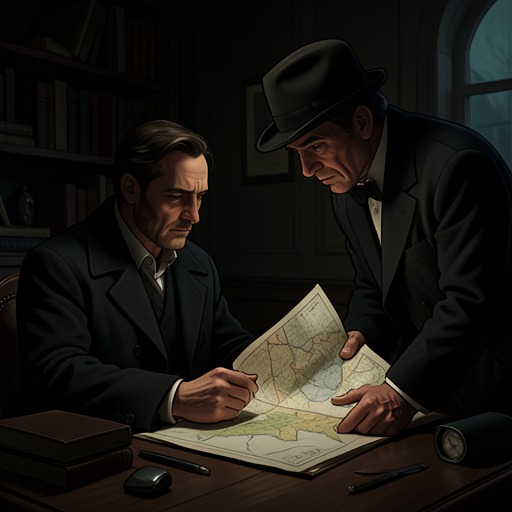
Stapleton introduces himself to Dr. Watson on a gray road across the moor, having hurried after him to make an informal acquaintance. He identifies himself as a resident of Merripit House and says that James Mortimer, a mutual friend, had pointed Dr. Watson out from the window of his surgery. The botanical specimen box and butterfly-net he carries mark him, before he gives his name, as a naturalist. He already knows that Dr. Watson is attending Sir Henry Baskerville and asks whether Sir Henry has suffered from his journey.
Stapleton describes himself as a newcomer: he has been on the moor for only two years, arriving shortly after Sir Charles Baskerville settled there. Although local residents still regard him as new, he says his interests have led him to explore the surrounding country extensively. His account establishes both the relative brevity of his residence and the confidence with which he presents himself as an authority on the landscape.
Naturalist and Interpreter of the Moor
Stapleton’s attachment to natural history shapes his introduction and his dealings with the countryside. The net and specimen box are practical signs of his collecting interests; later he says he has been pursuing a rare Cyclopides butterfly, one seldom found in late autumn. His familiarity with the terrain is not merely claimed: he moves across the broken ground while carrying the net, and his earlier invitation offers Dr. Watson a walk to Merripit House and an introduction to Beryl.
He also presents the moor as a place of scale and mystery, describing its rolling green elevations and jagged granite formations as a landscape whose secrets remain difficult to imagine. The description conveys his fascination, but it also gives the setting an importance beyond scenery: the moor is the domain he has explored and claims to know unusually well. That local expertise becomes part of the impression he makes on Dr. Watson, even as the events around him encourage caution about what his apparent openness reveals.
Conduct Toward Beryl Stapleton
Stapleton’s relationship with Beryl is first marked by a small but telling strain. When he returns from chasing the butterfly, he greets her, but Dr. Watson feels that his tone is not fully cordial. Beryl replies familiarly, calling him Jack; Stapleton explains his unsuccessful chase without acknowledging any tension. His small, light eyes, however, keep glancing between Beryl and Dr. Watson. The contrast between the composed explanation and his restless attention makes the moment feel guarded without establishing what he is thinking.
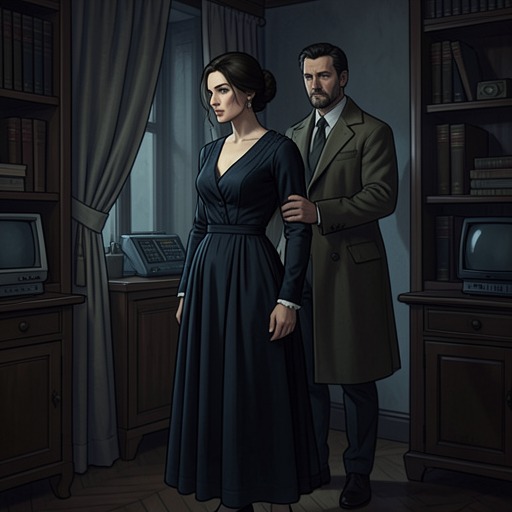
The tension becomes more visible when Dr. Watson later watches Beryl and Sir Henry speaking on a path. Stapleton approaches across the broken ground, identifiable by the green butterfly-net he carries. As Sir Henry draws Beryl toward him, she appears to strain away and raises a hand as if in protest. Stapleton then runs up, gesticulating excitedly. Dr. Watson cannot hear the conversation, but sees an angry exchange: Sir Henry offers explanations, Stapleton refuses to accept them, and Beryl stands silent. Stapleton beckons her away; after an irresolute glance toward Sir Henry, she leaves with her brother. Sir Henry remains behind, visibly dejected.
Conflict with Sir Henry
Sir Henry later tells Dr. Watson that he had intended to ask Beryl to marry him when Stapleton rushed up in fury. According to Sir Henry, Stapleton challenged his attentions to Beryl and questioned whether his title entitled him to behave as he pleased. Sir Henry answered that his feelings were honorable and that he hoped Beryl would accept him as his wife. The encounter ended with Stapleton taking Beryl away, leaving Sir Henry confused and angry. This account supplies the proposal and the spoken dispute that Dr. Watson, watching from a distance, could only partially interpret.
That afternoon, Stapleton visits Sir Henry to apologize for his rudeness. After a long private conversation in Sir Henry’s study, the breach is declared healed, and a dinner at Merripit House is arranged for the following Friday as a sign of reconciliation. Sir Henry accepts the apology as impressively made, while admitting that he cannot forget the look in Stapleton’s eyes during the confrontation. The rapid passage from public fury to private apology repairs the immediate quarrel but leaves Sir Henry’s unease intact.
Narrative Presentation
Stapleton is characterized through a gap between explanation and observable behavior. He describes his pursuit of a rare butterfly as an ordinary disappointment, yet his glances at Beryl and Dr. Watson draw attention to the encounter’s tension. He claims an intimate knowledge of the moor, while Dr. Watson’s account emphasizes how much remains uncertain about the scenes he witnesses there. The limited viewpoint is important: Dr. Watson observes gestures, posture, and changes of expression, but cannot initially establish the meaning behind them.
In these episodes, Stapleton’s naturalist identity is neither discarded nor enough to explain him. The equipment that identifies his hobby also accompanies him when he approaches Beryl and Sir Henry; his interest in the landscape frames his introduction, while his behavior in human relationships unsettles its welcoming tone. The result is a portrait built from contrast: a courteous introduction and an abrupt temper, a confident account of local knowledge and a private interview whose terms remain undisclosed, an apology accepted by Sir Henry and a look that still troubles him.